

For decades, fitness enthusiasts have relied on creatine monohydrate to build muscle and increase power output. However, modern scientific literature shows that creatine benefits extend far past athletic performance. Today, integrative and functional healthcare providers are increasingly recommending this well-researched compound as a daily foundational nutrient. Since high-energy organs like the brain, heart, and bones rely heavily on rapid cellular energy replenishment, targeted supplementation plays a crucial role in supporting cognitive function, healthy longevity, and female metabolic health across every decade of life.
The Bioenergetics of Creatine
To understand how creatine functions throughout the body, it helps to examine cellular energy production. Every cell relies on adenosine triphosphate (ATP) as its primary energy currency. During high-demand activities, ATP breaks down into adenosine diphosphate (ADP) and loses a phosphate group.
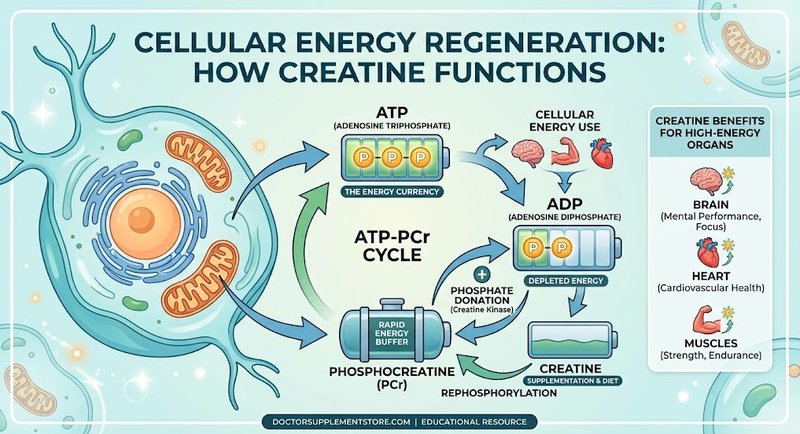
Creatine is stored in tissues as phosphocreatine. It acts as an immediate energy reservoir by donating a phosphate molecule back to ADP, rapidly regenerating fresh ATP. While the body produces small amounts of creatine in the liver and kidneys, and acquires additional amounts through animal proteins, dietary intake is rarely enough to fully saturate tissue stores. Supplementation ensures these high-demand cellular systems operate at peak capacity.
Brain Health and Neurological Resilience
The human brain accounts for roughly 20% of the body's total energy consumption despite making up only 2% of its weight. Since neural networks require constant ATP availability, maintaining optimal brain stores yields significant benefits for mental performance.
- Cognitive Efficiency: Clinical studies demonstrate that daily supplementation improves short-term memory, working memory, and processing speed, particularly during periods of mental fatigue or sleep deprivation.
- Mood Support: Research indicates that creatine plays a supportive role in mood regulation by stabilizing mitochondrial bioenergetics and supporting neurotransmitter pathways in prefrontal brain structures.
- Neuroprotection: Creatine helps buffer cells against oxidative stress and energy deficits, offering proactive support for long-term neurological resilience as the brain ages.
Healthy Aging and Sarcopenia Prevention
Sarcopenia, the age-related loss of muscle mass, strength, and bone density, directly impacts mobility and quality of life. Maintaining lean tissue and structural integrity becomes vital as cellular energy production naturally declines over time.
Combining daily creatine supplementation with resistance or functional movement helps older adults preserve lean muscle tissue and support bone mineral density better than exercise alone. Beyond physical strength, sustained cellular energy helps reduce systemic oxidative stress, promoting healthy mitochondrial function across aging tissues.
Women's Wellness Across Hormonal Shifts
Women experience distinct physiological demands that make supplementation particularly advantageous. Female bodies typically possess lower endogenous creatine stores than males, and estrogen fluctuations directly influence how energy is synthesized and utilized.
- Menstrual and Reproductive Years: Estrogen levels fluctuate dramatically throughout the cycle. During low-estrogen phases, creatine synthesis slows down, which can contribute to physical fatigue and cognitive fog.
- Perimenopause and Menopause: The steep drop in estrogen during menopause accelerates muscle loss and alters brain energy metabolism. Creatine benefits include preserving lean muscle tone, aiding mood stability, and supporting cognitive clarity through these transitions
- Plant-Based Diets: Vegetarian and vegan women often have significantly lower baseline stores, making supplemental intake even more impactful for their overall energy levels.
Dosing, Safety, and Clinical Adherence
When selecting a supplement, purity and form matter. Creatine monohydrate remains the gold standard in clinical research due to its unmatched bioavailability, safety profile, and stability. Newer formulations often lack the robust clinical backing of standard monohydrate.
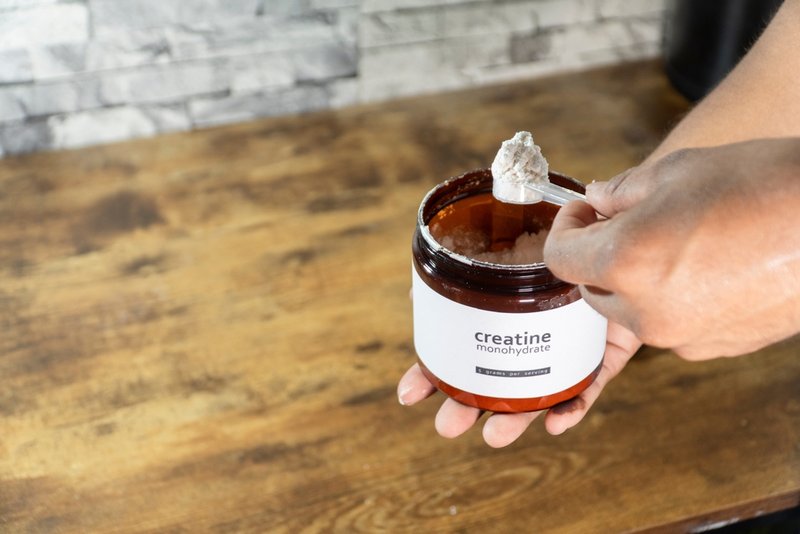
A consistent daily dose of 3 to 5 grams effectively saturates tissue stores over three to four weeks without requiring an aggressive loading phase. For cognitive or clinical applications, providers sometimes recommend up to 10 grams daily under direct guidance.
Concern regarding kidney function is a common misconception rooted in confusion between serum creatinine (a metabolic byproduct) and kidney stress. Research consistently confirms that standard daily doses are safe for healthy individuals. Choosing micronized powders or clean capsules helps eliminate mild digestive discomfort and improves patient adherence over time.
Elevating Patient Outcomes With Quality
As research continues to reveal the multi-systemic creatine benefits for brain health, hormonal balance, and longevity, healthcare providers can confidently guide patients toward integrating this foundational nutrient into their wellness routines. Utilizing professional-grade supplements ensures that patients receive pure, third-party tested ingredients free from unnecessary fillers or additives.
Through Doctors Supplement Store (DSS), providers can easily offer patients direct access to trusted, professional-brand supplements. By streamlining product selection and fulfillment, DSS helps support long-term regimen adherence so patients can reliably experience the full spectrum of creatine benefits for vibrant, healthy aging.
Doctors Supplement Store provides healthcare providers with a completely free, customized online dispensary platform. We handle inventory, automated shipping, sales tax recordkeeping, and customer service, offering 99.992% order accuracy and same-day shipping. With intuitive tools like EZScripts and automated reorder options, you can support patient adherence and grow practice revenue without the hassle of managing stock.
Connect with us today to schedule a demo and set up your customized dispensary for free.
The information provided in this article is intended strictly for educational and informational purposes and does not constitute medical advice, diagnosis, or treatment. Supplement requirements and appropriate dosages vary based on individual health status.